What are "weight-loss peptides"?
Almost everything the research literature groups under this label is an incretin mimetic — a synthetic peptide built to activate the receptors of gut hormones that signal satiety and regulate glucose. GLP-1 (glucagon-like peptide-1) is the hormone the class is named for; newer compounds add GIP and glucagon receptor activity on top of it.
The distinction that matters when reading trial data: these are receptor agonists, not fat burners. They reduce energy intake by acting on appetite signalling — the weight change in every major trial is mediated by eating less, which is also why every major trial pairs the compound with a lifestyle intervention.
| Peptide | Receptors | Development stage |
|---|---|---|
| Semaglutide | GLP-1 | Approved medicine (as branded formulations); studied since 2016 |
| Tirzepatide | GLP-1 + GIP | Approved medicine (as branded formulations); phase 3 complete |
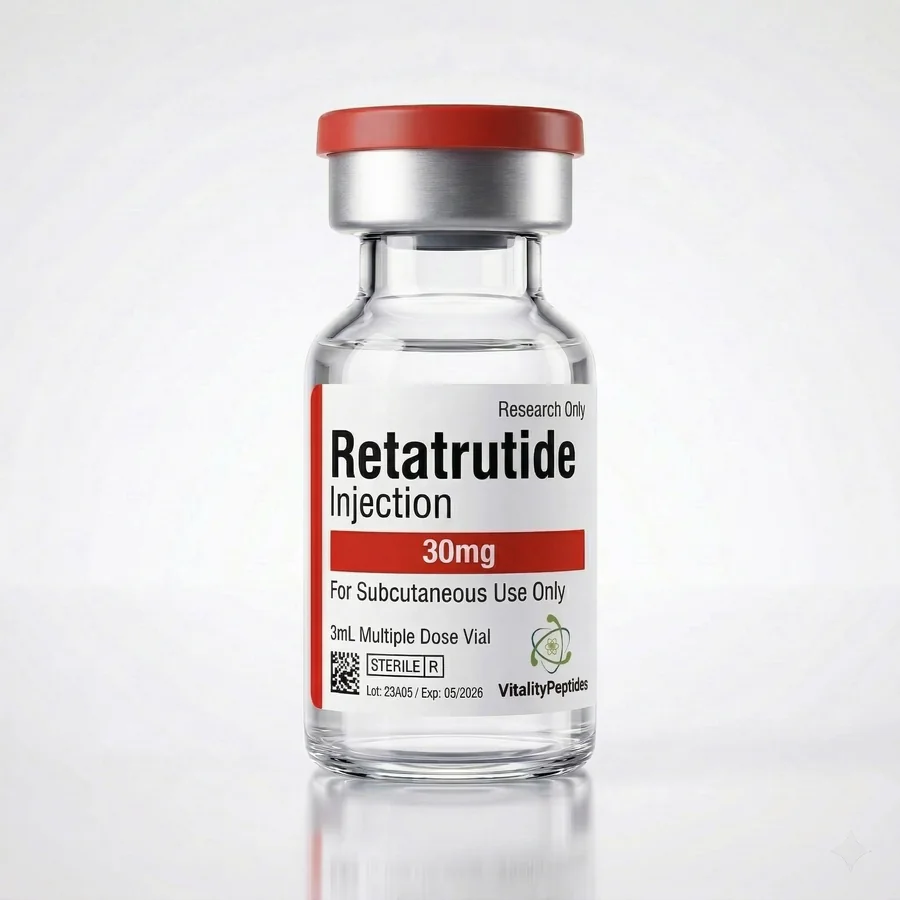
| Retatrutide | GLP-1 + GIP + glucagon | Phase 3 ongoing — all headline data is phase 2 |
What do the published trials actually show?
Three trials define the current evidence base, and their headline numbers are worth stating precisely — including the trial length behind each, because the durations differ and the figures are not directly comparable.
Two design details are routinely dropped when these figures circulate. First, every participant — including placebo — received lifestyle counselling; the drug effect is measured on top of diet support, not instead of it. Second, all three trials report mean changes: individual responses ranged from far above the mean to non-response.
What about peptides outside the incretin class?
The research catalogue holds several peptides studied for metabolic effects that are not incretin mimetics. The evidence for them is earlier-stage, and honest framing matters.
MOTS-c — mitochondrial, and still preclinical
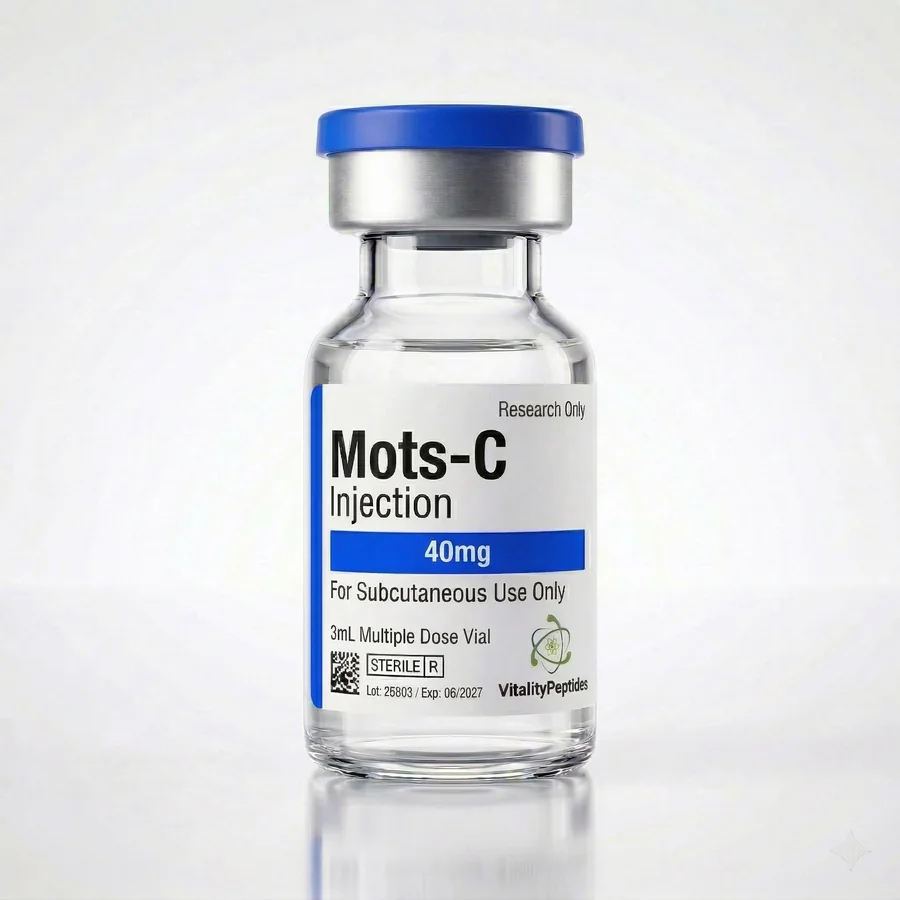
MOTS-c is a 16-amino-acid peptide encoded in mitochondrial DNA. In the foundational mouse work it promoted metabolic homeostasis, improved insulin sensitivity, and prevented diet-induced obesity. It is one of the most interesting compounds in metabolic research — and its published weight data is in mice, not humans.
AOD-9604 — the cautionary tale
AOD-9604 is a fragment of human growth hormone (residues 177–191) that showed genuine lipolytic activity in obese-mouse studies. Its human obesity programme was later discontinued after mid-stage trials failed to reproduce that efficacy. It remains a legitimate research compound; it is also the clearest example in this field of rodent data failing to translate.
How do researchers in India source these peptides?
Retatrutide is not commercially available as a medicine anywhere in the world, and research-grade versions of the whole incretin class circulate widely in India. That supply splits into two very different channels: importing from overseas research vendors — with customs delays and cold-chain exposure — or buying from an Indian supplier that stocks domestically and ships in rupees.
The channel matters less than the verification. A research peptide is only as good as its batch documentation: an HPLC purity trace tied to the batch number on the vial, published where you can read it before ordering. Batch-specific Certificates of Analysis are the single strongest filter against the relabelled and counterfeit product that this category attracts.
- Match the COA’s batch number to the vial — a product-level PDF reused across batches verifies nothing.
- Expect an HPLC chromatogram, not just a stated percentage.
- Prefer domestic dispatch — peptide stability suffers in long customs holds, especially in Indian summer transit.
What this research does not mean
Research-grade peptides in India are supplied strictly for laboratory research. They are not CDSCO-approved medicines, no dosing guidance applies to them, and nothing on this page is medical advice. The clinical figures above describe what happened to trial participants receiving pharmaceutical formulations under medical supervision — they are not predictions about any other context.
The research is genuinely exciting. It is also specific: defined compounds, defined populations, defined oversight. Respecting that specificity is what separates reading the literature from misusing it.