How do growth-hormone peptides work?
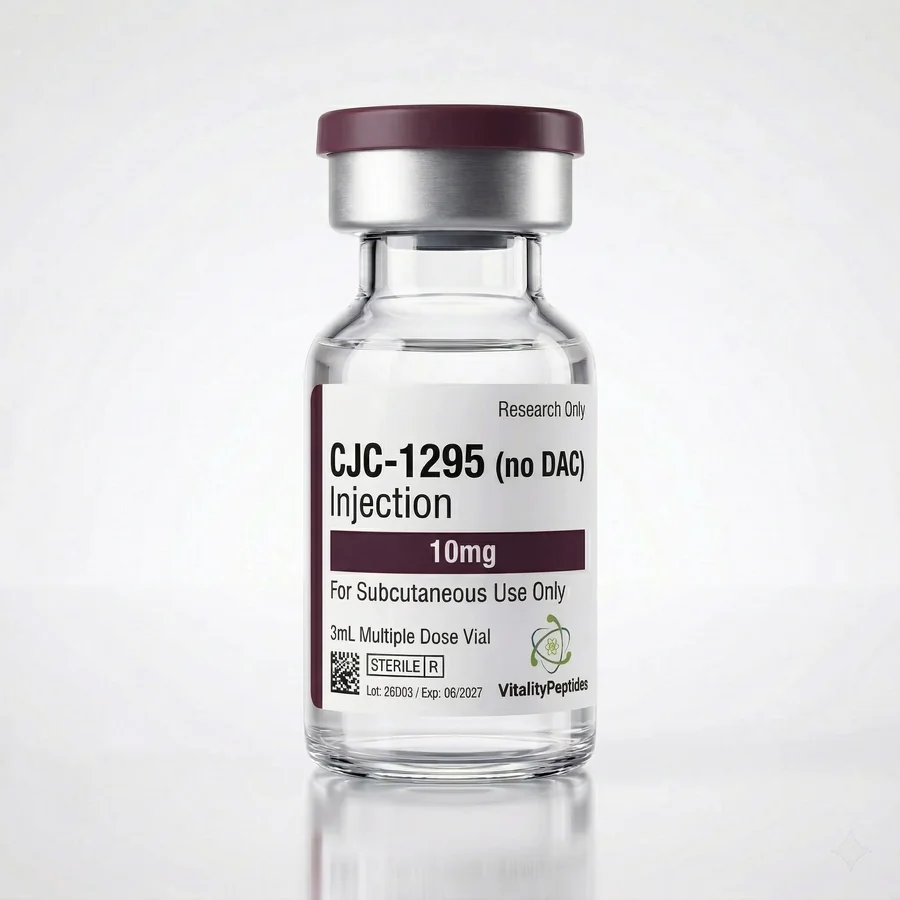
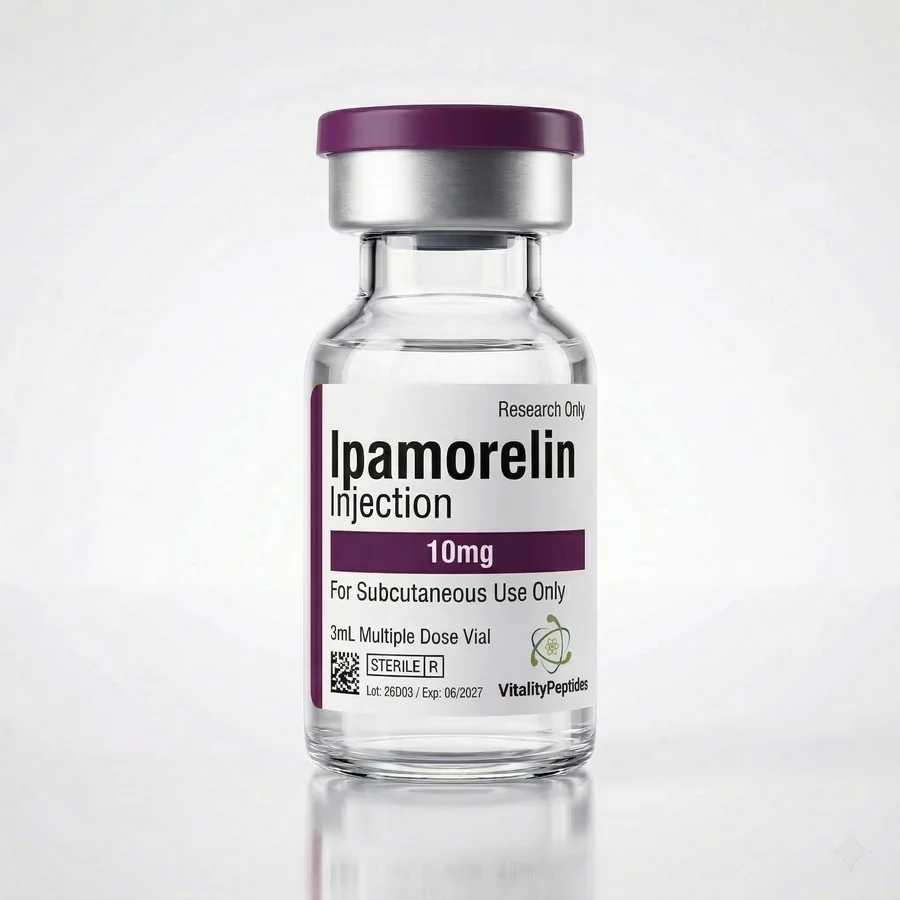
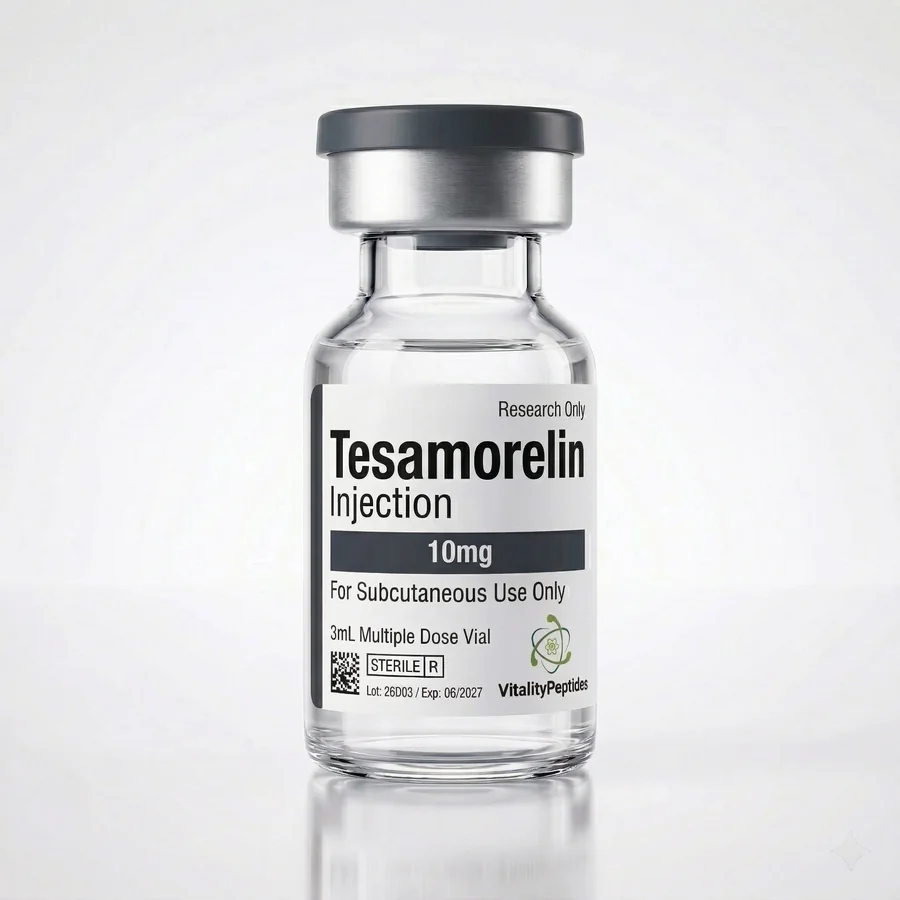
Two receptor families cover nearly every peptide in this category. GHRH analogues — CJC-1295, tesamorelin, sermorelin — mimic growth-hormone-releasing hormone, signalling the pituitary to synthesise and release GH. Ghrelin mimetics, also called growth hormone secretagogues — ipamorelin and the older GHRPs — act on the ghrelin receptor to amplify the pulse of that release.
The downstream product of both routes is the same: more endogenous GH, and consequently more IGF-1 synthesised in the liver. Nothing exogenous is supplied except the signal — which is precisely what distinguishes this class from injecting GH itself.
Ipamorelin’s significance in the literature is selectivity. The first-generation secretagogues released GH but dragged cortisol, ACTH and prolactin up with it. Ipamorelin was the first compound shown to trigger GH release without those off-target elevations — which is why it became the default ghrelin-mimetic in research stacks.
Does raising GH actually build muscle?
This is where the research says something more specific — and less convenient — than the marketing does. The best evidence summary remains the Annals of Internal Medicine systematic review of growth hormone in healthy, trained adults.
The strongest single-compound trial in the class belongs to tesamorelin — a 26-week NEJM trial in HIV-associated lipodystrophy that reduced visceral adipose tissue by roughly 15% versus placebo. That is a fat-compartment result, not a hypertrophy result, but it is the class’s clearest demonstration that sustained GHRH signalling changes body composition in humans.
What about IGF-1 LR3?
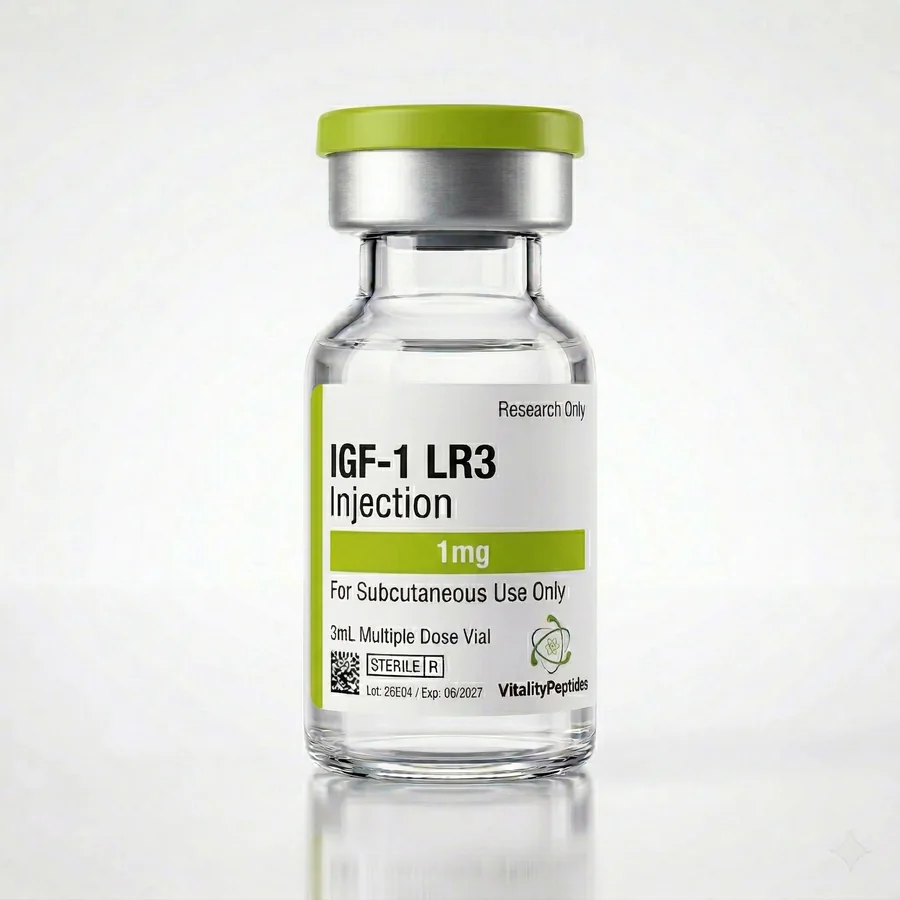
IGF-1 LR3 is an analogue of insulin-like growth factor 1 engineered with an arginine substitution and a 13-residue N-terminal extension. The design goal was pharmacological: the modifications sharply reduce its affinity for IGF binding proteins, which leaves more of the peptide free and active. That extended-activity profile is an in-vitro finding from the foundational protein-engineering work.
Its muscle-growth reputation extrapolates from IGF-1 biology — IGF-1 is a genuine mediator of muscle protein synthesis — but controlled human data on LR3 itself does not exist. It is a preclinical research compound, full stop.
Are peptides steroids?
No — and the distinction is structural, not semantic. Anabolic steroids are synthetic derivatives of testosterone: lipid-soluble molecules that enter cells and activate the androgen receptor directly, driving muscle protein synthesis through androgen signalling. Peptides are chains of amino acids acting on cell-surface receptors — in this category, receptors of the GH axis.
| GH-axis peptides | Anabolic steroids | |
|---|---|---|
| Molecule class | Amino-acid chains | Modified testosterone derivatives |
| Target | Surface receptors (GHRH-R, ghrelin-R) | Intracellular androgen receptor |
| Effect route | Raise endogenous GH → IGF-1 | Direct androgenic signalling |
| Human strength evidence | Not demonstrated (Liu 2008) | Extensively demonstrated |
One thing they share: sport status. GH-releasing peptides, secretagogues and IGF-1 analogues all sit in section S2 of the WADA Prohibited List, banned at all times for competing athletes. Different mechanism, same rulebook.
How do researchers in India source these peptides?
CJC-1295, ipamorelin, tesamorelin and IGF-1 LR3 all circulate in India as research-grade lyophilised peptides. The category’s real problem is not availability but verification — GH-axis peptides are among the most counterfeited compounds in the research supply chain.
- Demand a batch-specific COA with an HPLC chromatogram — a purity percentage without the trace behind it is a claim, not evidence.
- Match the batch number on the certificate to the vial in hand.
- Prefer domestic dispatch over import: shorter transit, no customs hold, cold-chain intact.